
Cape Town’s Historic Lighthouses, Privately Guided
The Clock Tower:
The Nerve Centre of the Old Docks
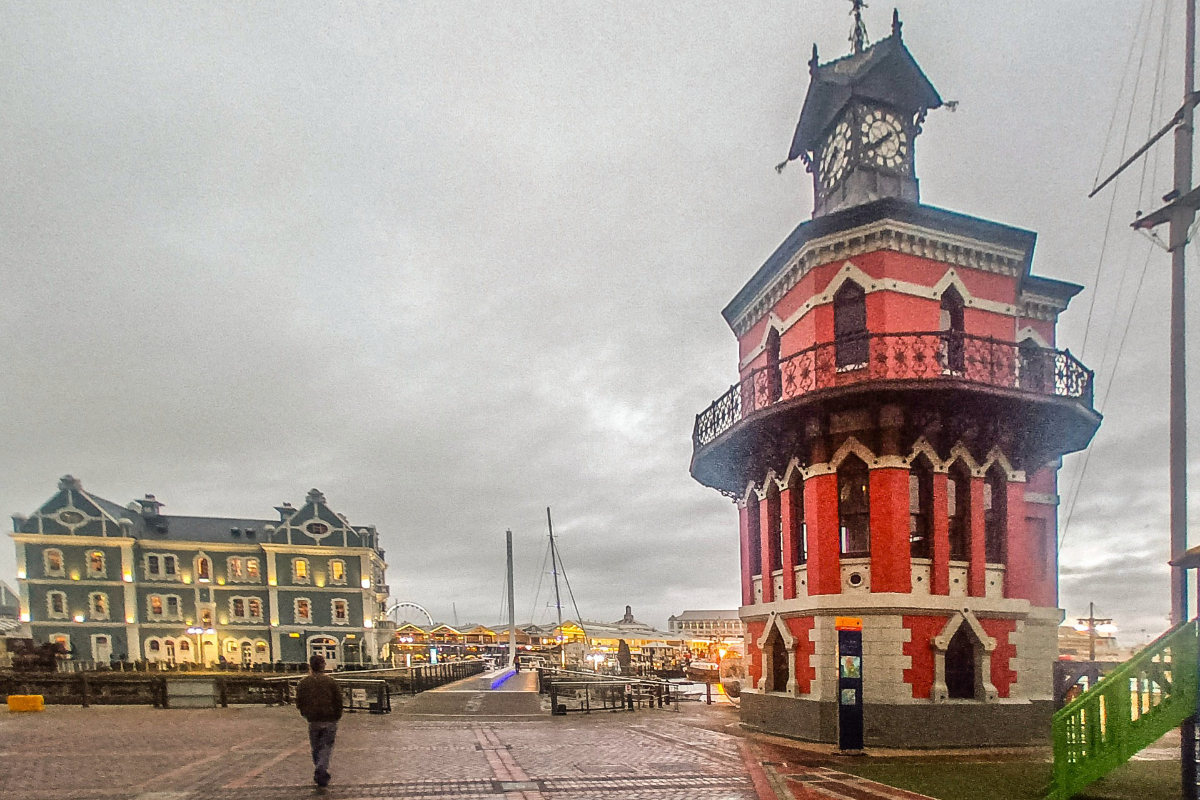
The African Trading Port building and the Clock Tower at the V&A Waterfront
Most people walking through the V&A Waterfront today see the red clock tower as little more than a picturesque relic—a backdrop for photos or a signpost for the Robben Island ferries.
For the lighthouse keepers and their families living on Robben Island, this building was a fixture of their daily routine. The ferry from the island docked right alongside it, making the Tower the gatehouse between the island’s isolation and the busy city streets. For the keepers’ children, it was the point of arrival for their daily commute to school on the mainland.
But this clock tower was much more than that. If you look a bit closer, it’s actually the most significant building in the harbour’s history.
Built in 1882–1883, the tower was designed to be functional. The Port Captain’s office, located on the second floor, was the nerve centre for everything entering or leaving Table Bay. The Captain had a clever setup of mirrors that allowed him to monitor the harbour mouth without ever leaving his desk, while a tidal gauge on the ground floor provided the depth readings that prevented ships from running aground.
The tower helped ships navigate safely not only in the harbour but also in the oceans between far-off continents. One of the most important parts of the building was the clock itself. It was the authoritative reference for local mariners. Prior to GPS, the only accurate method for a captain to know his longitude was to have an accurate time signal. When a ship docked in Cape Town, it was the Tower’s clock they came to calibrate their chronometers with before heading back out into the Atlantic.
By 1904, the harbour had outgrown the space, and the administrative functions moved to the building across the pier—the structure we now know as the African Trading Port. The Clock Tower was relegated to a signal station, and eventually, it just became a piece of history.
It’s worth remembering, though, that the clock tower wasn’t built as a tourist attraction. It was built for sailors who were risking everything on a long voyage. Cape Town wasn’t built on the views of the mountain; it was built on the precision of the docks. Every time you pass the Tower, you’re looking at the building that essentially kept the port running while helping to keep ships safe out at sea for a quarter of a century.