
Cape Town’s Historic Lighthouses, Privately Guided
The Green Point Lighthouse:
Men Turned Into Keepers
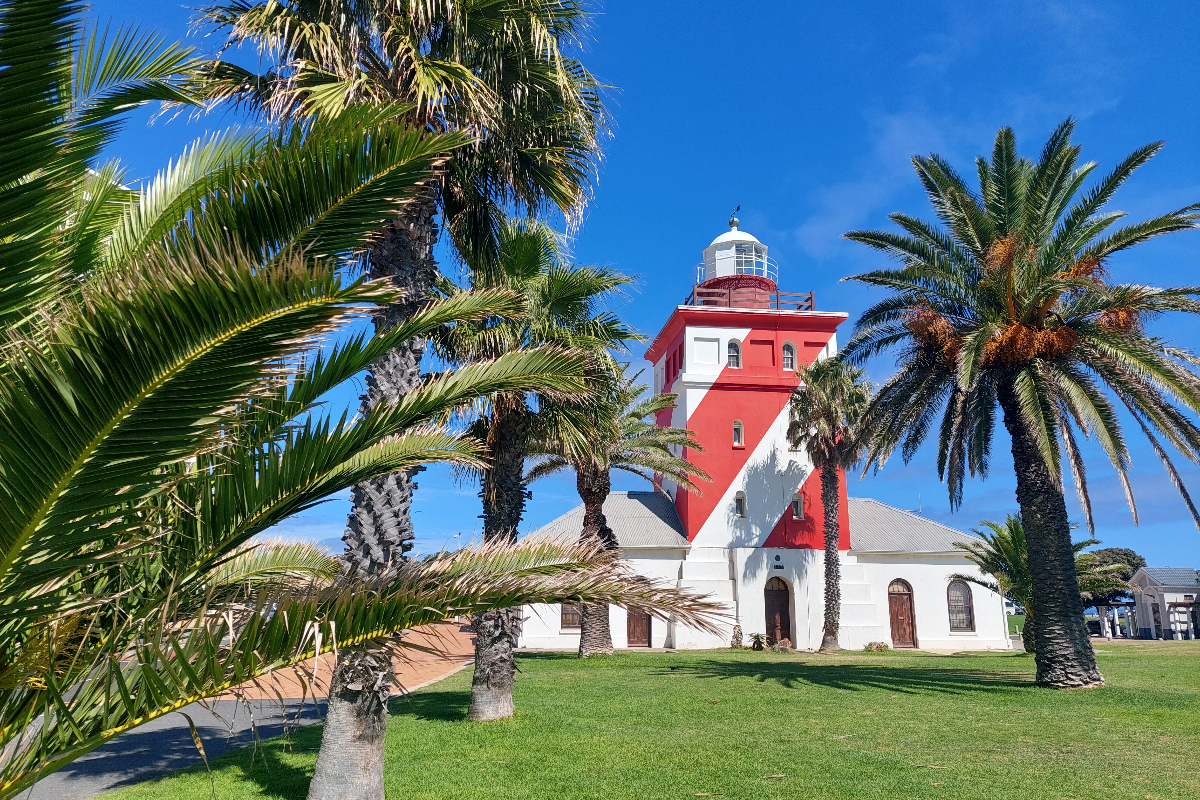
The Green Point Lighthouse in Cape Town
Lighthouse keeping is the romantic, almost lazy life most people imagine, a solitary figure on the balcony, pipe in hand, watching the sun bleed into the sea. The reality at Green Point was nothing like this. It was a hard, merciless apprenticeship that could break a young man in months or make him into something unbreakable. Only three or four of the trainees at a time lived in those cramped stone quarters, with the Atlantic always just outside the door, the next storm never more than a few days away. The majority were in their early twenties, fresh out of maritime college or the merchant navy. Some were from quiet villages in the Eastern Cape, others from the busy harbours of Durban or Port Nolloth. They all sought stable jobs in a world that was already shifting beneath their feet.
No manuals, no soft introductions from the first morning. A polishing rag and a plunge right into the work. Training was in the unvarying beat of the 24-hour watch, four hours on, four hours off, in rooms with only a cot and a cupboard and the endless roll of the ocean. The first great test was the mechanical heart of the Light. Trainees had to learn the heavy clockwork machinery that turned the huge Fresnel lens. Every few hours, you hauled on the winch by hand, lifting the iron weights that kept the light turning. Miss the timing or the rhythm, and the beam would falter — a mistake that could cost ships their lives on the dark coast. Every gear, every drop of oil, every faint grinding note in the mechanism became part of your bones. Then came the lamps. In the early days they burnt paraffin and oil. Keepers learned to trim wicks with surgical precision, keep the fragile mantles spotless, and ensure fuel flowed without a single clog. Later, acetylene systems arrived — far more powerful, but merciless. One careless valve or pressure error and the whole lantern room could become a bomb. Safety drills were burnt into memory: pressure checks, leak detection, and emergency shut-downs performed in the dead of night. Fog signals added another layer of ordeal. Diesel generators had to be coaxed to life in the middle of howling storms, fuel lines were bled, and filters were swapped while salt spray whipped across the machinery like needles. At the centre of everything stood the Fresnel lens itself — a towering glass cathedral weighing tonnes, with each prism cut with optical genius. A single greasy fingerprint or crust of salt could cut its reach by miles. Cleaning it meant climbing precarious ladders inside the lantern room, balancing high above the rocks, wiping every surface with special cloths and solutions as though polishing the eye of God. Between watches there was no true rest. You painted ironwork, scraped rust, and varnished wood, locked in an endless battle against the Atlantic’s salt that tried to devour the station piece by piece. At 2 a.m. you climbed the tower again. You wound the weights, checked the burner, and stood in the lantern room staring into the black. The silence up there wasn’t peaceful — it was heavy with responsibility. Lives depended on your vigilance.
By the time a trainee left Green Point, he was no longer a young man hoping for steady work. He was a keeper — a man entrusted with the safety of sailors who would never know his name. That kind of duty changes a person forever. This was the school that produced generations of South Africa’s finest lightkeepers. If this story moves you, there is far more where it came from. The coast is full of these quiet, heroic histories — and the lights are still standing. Some of them are waiting for you to come and see them in person.